
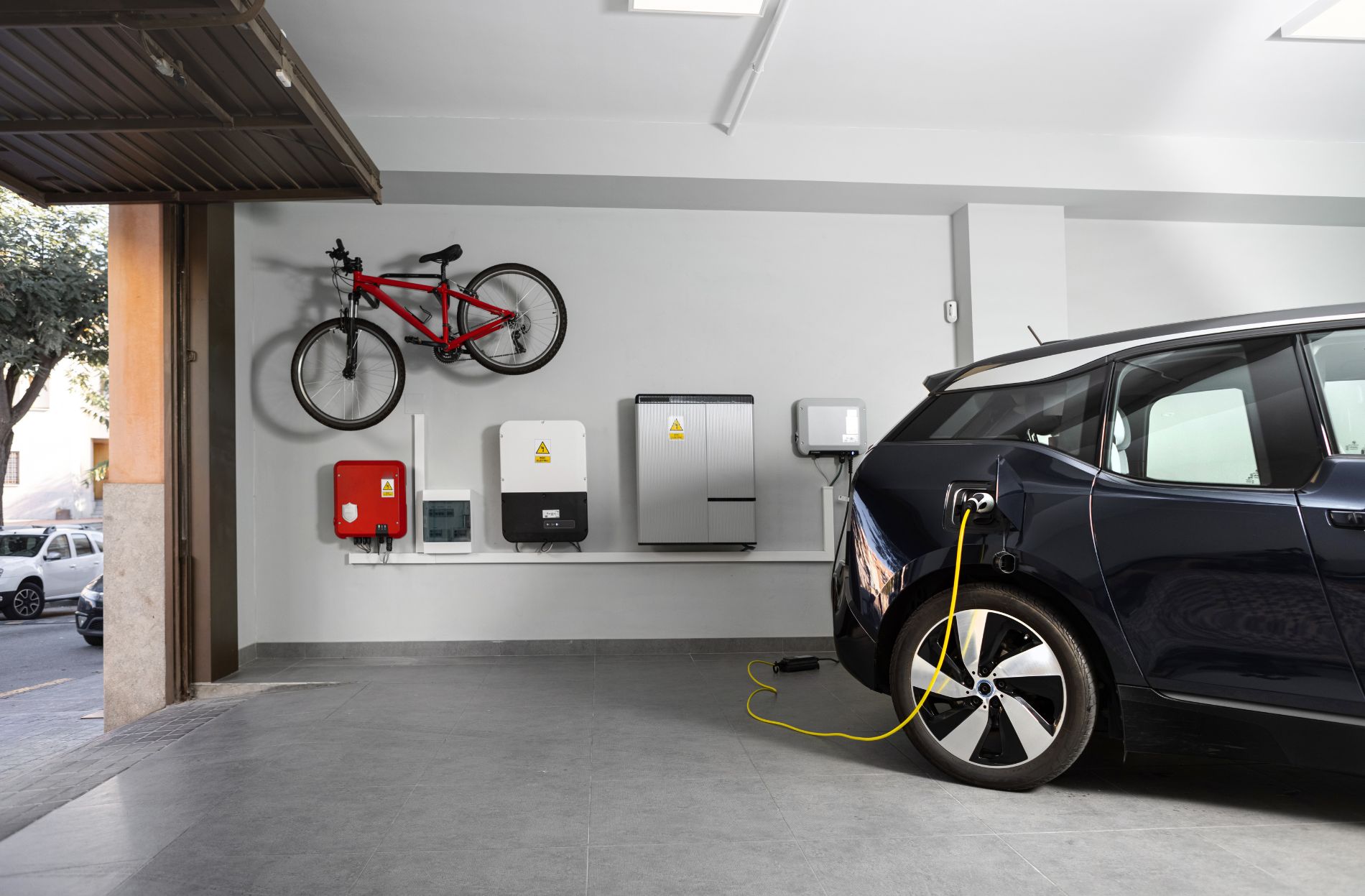
At Lumos Electric, we’ve seen firsthand how switching to an electric vehicle (EV) brings more than just a change in how you drive; it changes how you think about convenience, cost, and energy use. One of the most impactful steps you can take as an EV owner is installing a home charging station.
If you’re considering making the upgrade, here’s what you need to know about the real-world benefits of home EV charging.
Convenient Charging That Fits Your Schedule
Charging your EV at home is all about freedom. Instead of planning your day around public charging stations, you simply plug in when you get home. Your car is ready to go the next morning with no lines, no cold-weather hassles, and no extra errands.
In Ottawa, where winters can get tough and temperatures dip below freezing, relying on outdoor public chargers can be inconvenient. With a home charger, you skip the wait and stay warm indoors while your vehicle charges safely in your garage or driveway.
This also helps reduce range anxiety, a common concern for new EV drivers. When your vehicle charges while you sleep, you’re not constantly thinking about your battery level throughout the day. It becomes as easy as charging your phone overnight.
Long-Term Cost Savings That Add Up
The cost of installing a home charger can vary depending on the equipment and your home’s electrical setup, but it’s essential to view it as an investment. Over time, it can lead to meaningful savings.
Public charging stations often have variable pricing, and fast chargers are typically more expensive per kilowatt-hour. Charging at home, especially during off-peak hours, is consistently cheaper.
For example, Natural Resources Canada estimates the average cost of home charging to be between $2 and $5 per 100 kilometres, based on your electricity rate. In comparison, fueling a gas-powered vehicle for the same distance could cost anywhere from $10 to $15, depending on current fuel prices.
Some utility providers in Ontario also offer time-of-use pricing, which rewards homeowners for charging during lower-demand hours, typically at night. Taking advantage of these rates can further reduce your charging costs.
There may also be government rebates available for the charger itself or the installation. These programs vary over time, so it’s worth checking what’s currently available in your area.
On the Blog: The Difference Between Level 1 & 2 EV Chargers
Lowering Your Environmental Impact
Many people switch to EVs to reduce their carbon footprint, and home charging gives them greater control over that goal.
While all EVs produce fewer emissions than gas-powered cars, your total environmental impact depends on how your electricity is generated. If your home uses clean or renewable energy, you can significantly reduce emissions by charging your EV with it.
Even if you’re drawing power from the primary grid, Canada’s electricity mix is one of the cleanest in the world. According to the Canada Energy Regulator, more than 80% of the country’s electricity comes from non-emitting sources, such as hydro, wind, and solar. So even without a solar setup at home, you’re already charging with relatively low-impact energy.
Installing your own home EV charger supports a more sustainable lifestyle and reduces your reliance on fossil fuels. It’s a meaningful step toward energy independence, especially if you’re thinking of adding solar panels in the future.
Choosing the Right Charger for Your Home
When you’re ready to install an EV charger, choosing the right one can make all the difference in your daily experience. At Lumos Electric, we help our customers select equipment that fits their vehicles, their driving habits, and their homes.
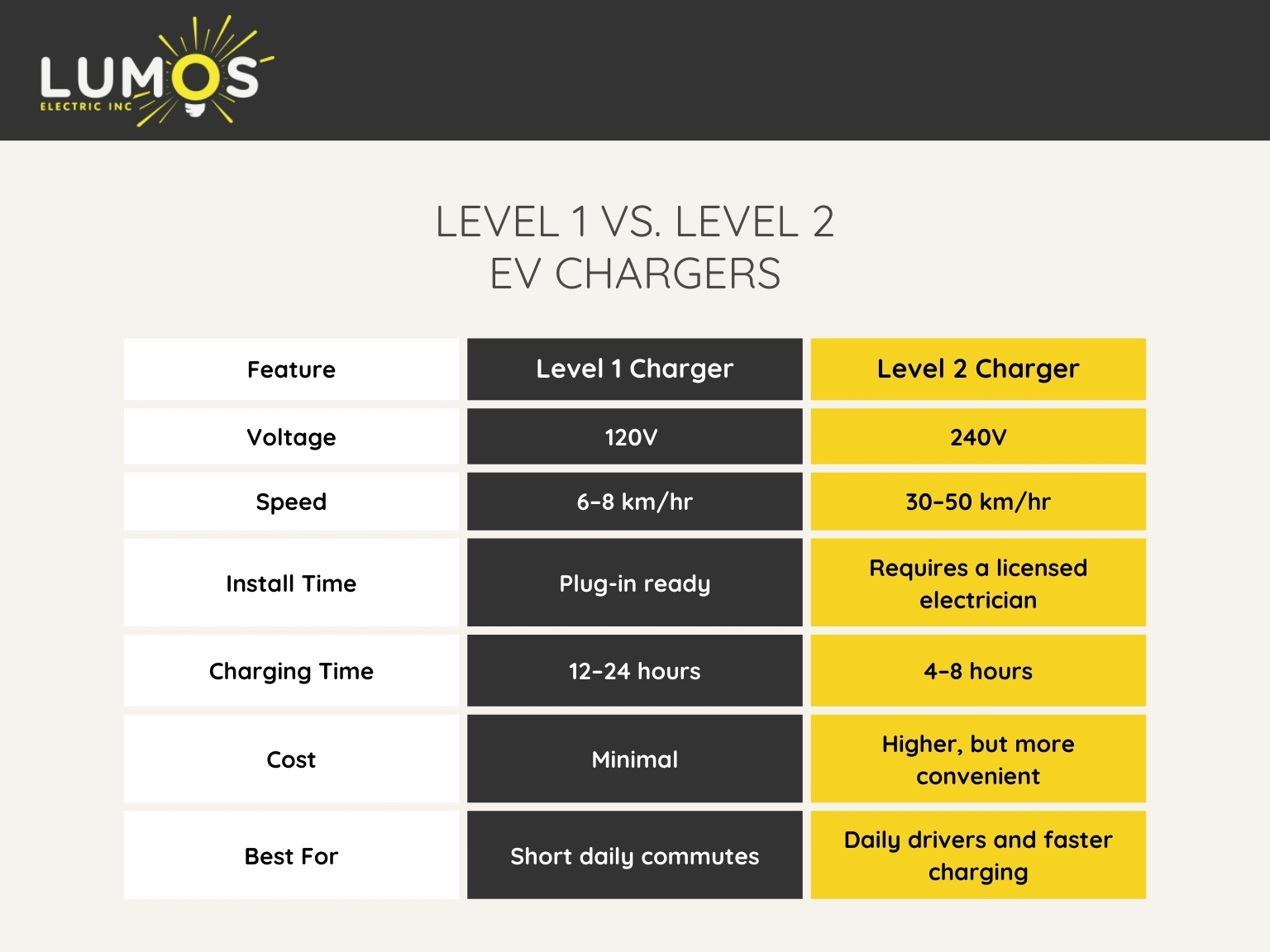
There are two main types of residential chargers:
- Level 1 chargers: These use a standard household outlet and are the slowest option. They typically add about 8 kilometres of range per hour of charging. They’re fine for occasional use but can be limiting for daily drivers.
- Level 2 chargers: These require a dedicated 240V outlet and offer much faster charging. Most Level 2 units can fully charge an EV overnight, adding 30-50 kilometres of range per hour.
If you drive a Tesla, consider a brand-specific charger. However, many high-quality universal chargers are compatible with all major EV models.
Installation costs depend on your home’s electrical panel capacity and whether any additional upgrades are required. We always recommend that you have a licensed electrician assess your setup to ensure safety, code compliance, and optimal performance.
Did You Know?
A 2022 report from the International Energy Agency (IEA) found that residential charging accounts for nearly 70% of all EV charging globally. It remains the most cost-effective and accessible way to power an electric vehicle.
Why Ottawa Homeowners Trust Lumos Electric
We’ve installed EV chargers in homes across Ottawa and the surrounding areas, and we understand the unique challenges posed by cold climates, older homes, and varying utility configurations.
Our team works with you to:
- Assess your current electrical capacity
- Recommend the right equipment
- Provide a safe, code-compliant installation
- Answer all your questions, from charger speed to incentive programs
Whether you’re just getting started with your first EV or upgrading to a more powerful Level 2 unit, our licensed electricians make the process smooth and stress-free.
Final Thoughts: Is EV Home Charging Worth It?
Whether you already own an EV or plan to get one soon, installing a home charger offers real benefits::
- You save time by charging on your own schedule
- You reduce your long-term costs with cheaper, off-peak energy
- You help the environment by cutting emissions from both fuel and unnecessary driving
- You gain peace of mind during Ottawa’s unpredictable weather
At Lumos Electric, charging your EV should be as easy and efficient as driving it. That’s why we’re here to help homeowners make the switch with confidence and clarity.
If you’re ready to explore home EV charger installation options, we’d be happy to provide guidance and a personalized quote. Let’s make your transition to electric driving as seamless and straightforward as possible.
Contact us today to learn more.